
Dungeon Odyssey
Super PlanetRole Playing
4.6100.00 Reviews
- Version
- 1.0.9
- Installs
- 100.00K
- Age Rating
- Everyone
Screenshots


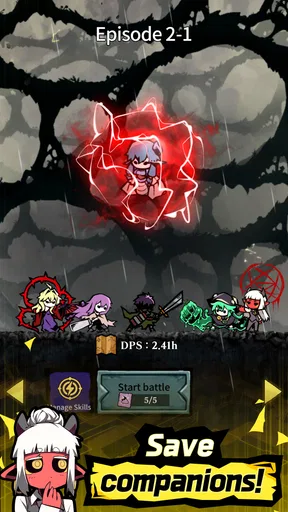
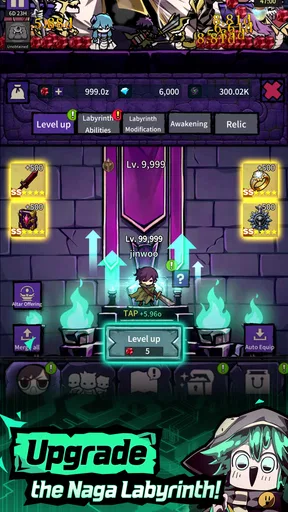

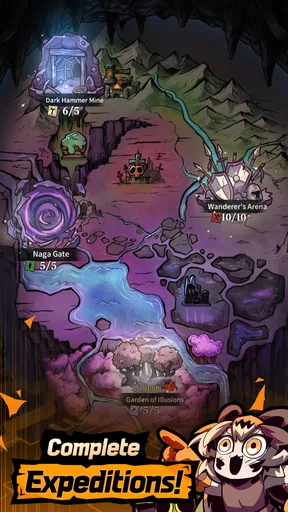

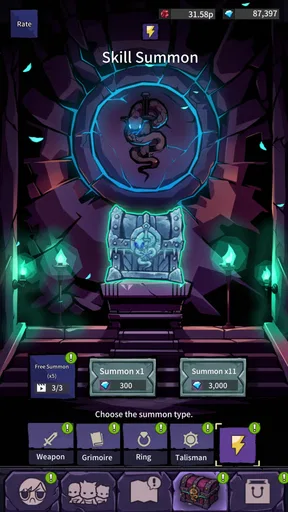
Our Review of Dungeon Odyssey
 Analysis by Appyee
I went into Dungeon Odyssey expecting a lightweight role-playing game built around short sessions, and that is the right way to approach it. Developed by Super Planet, it turns a web-comic world with more than 20 million views into an idle RPG focused on conquering a labyrinth. The basic appeal is easy to understand: you build momentum over time, check your progress when you have a spare minute, and return to see whether your character can push farther.
That format makes it a comfortable fit for people who enjoy progression without needing to control every second of a battle. It is free to start, rated for Everyone, and has already passed 100K+ installs. At the same time, an idle game lives or dies by how well it turns waiting into meaningful progress. My experience with this one is that its strongest moments come from setting a small objective and watching the dungeon gradually become manageable, while its weaker moments appear when the next step feels more like persistence than decision-making.
How the labyrinth creates a reason to keep checking in
When I think about sharing a device, the useful question is less who can tap through a round and more whether each person can keep a clear sense of their own progress. Dungeon Odyssey’s short, return-based rhythm can fit around a household’s busy moments, but I’d agree in advance on who is using the game and when, then look at how that arrangement affects setup and coordination.
The first goals are simple, and that helps the game settle in
The opening appeal is not complexity. Dungeon Odyssey gives me a clear reason to continue: advance through the labyrinth, grow stronger, and see what waits beyond the current obstacle. That straightforward loop is useful because idle RPGs can become confusing when they introduce too many currencies, menus, or upgrade paths before the player understands the main goal. Here, the dungeon provides a visible direction even when the moment-to-moment play is largely automated.
I found the best early routine was to treat each visit as a short planning session rather than a conventional action-game run. I would check how far the character had progressed, collect what had accumulated, improve the most relevant part of the build, and then leave the game running toward the next barrier. That makes the game particularly suitable for a commute, a lunch break, or the few minutes before bed. It does not demand the same attention as a manually controlled role-playing adventure.
The web-comic connection also gives the setting a useful identity. This is not presented as an abstract collection of menus with a dungeon attached; it is built around a recognizable fantasy premise that has already attracted a large audience in another format. If you like seeing a comic-inspired world translated into a game, that foundation gives the progression more personality than a completely generic idle battler would have.
Progress feels clearest when I use small targets
One practical lesson is to avoid treating “reach the end” as the only goal. The labyrinth is more satisfying when I break it into smaller checkpoints: survive the current stretch, overcome the next wall, then improve the character before attempting another push. This matters because idle progression can otherwise feel vague. A small target tells me whether the latest upgrade actually changed anything.
I also recommend resisting the temptation to spend every available resource immediately. In a game built around repeated returns, saving enough for a meaningful improvement can be more useful than making several minor changes that are difficult to notice. The exact best choice will depend on the situation, but the general principle is consistent: use upgrades to solve a problem, not simply because a button is available.
This is one of the more interesting trade-offs in the design. The game asks for less direct control than a traditional RPG, but it still benefits from deliberate timing. I am not constantly choosing attacks or positioning a party; instead, my decisions are about when to invest, when to test the next section, and when to stop pushing and let the character accumulate more progress.
What counts as a meaningful unlock
The sense of progress in an idle RPG comes from more than a stronger number. A good unlock should change what I can attempt, make an earlier obstacle feel easier, or open a new reason to return. Dungeon Odyssey is most compelling when progression produces that kind of visible difference. If a new improvement only makes the same screen move slightly faster, the reward feels thinner, especially during longer sessions.
For new players, I would judge each unlock by three questions. Does it help me pass the obstacle that stopped me? Does it reduce the amount of waiting before the next attempt? Does it make the next check-in more interesting? If the answer is yes to at least one of these, the upgrade has a practical purpose. If not, I would hold resources rather than upgrade automatically.
That approach also helps prevent one common idle-game mistake: confusing activity with progress. Tapping through every available reward can feel productive, but the better habit is to connect each action to the labyrinth. The dungeon is the test, and the upgrade is valuable because it changes my ability to meet that test.
The challenge curve works best when I accept the rhythm
Dungeon Odyssey is not designed for constant dramatic victories. Its challenge curve is based on alternating stretches of progress and resistance. I can move forward for a while, then meet a point where the current setup is no longer enough. That pause is where the idle structure takes over: instead of forcing a difficult encounter repeatedly, I leave, return later, and try again with more strength.
For me, this rhythm is relaxing when the barrier arrives after I have had enough time to understand the current stage. It becomes less satisfying when the game appears to ask for waiting without giving me a clear reason why the next attempt should be different. The difference between those two experiences is important. A challenge feels fair when I can identify the improvement needed; it feels like a timer when progress is blocked without a useful decision.
My advice is to use failed pushes as information. If the character is falling short quickly, continuing to retry immediately is rarely the best use of time. Return to the upgrade screen, make one focused improvement, and let the game run. If the next attempt still fails in the same way, that tells me the problem is not a single small adjustment and that a longer accumulation period may be necessary.
Why the idle format suits certain everyday routines
A realistic use case is a player who has ten minutes in the morning, a few spare moments during the day, and no desire to start a long story-driven RPG at night. Dungeon Odyssey fits that pattern well. I can make a decision before work, let the character progress while I am occupied, and check the result later without needing to remember a complicated control sequence.
It is also a good option for someone who likes the feeling of building a character but does not always have the concentration for a demanding combat system. The labyrinth supplies a continuing objective, while the idle structure reduces the pressure to perform perfectly. That makes it more approachable than an action RPG that expects precise timing or uninterrupted attention.
However, I would not choose it as my main game if I want constant interaction. Players who enjoy manually chaining abilities, exploring every corner, or making tactical decisions during each battle may find the automated nature limiting. The game’s pleasure comes from preparation and return visits, not from controlling every encounter directly.
Where the pacing starts to ask for patience
The central weakness is the same feature that makes the game convenient: waiting. Idle progression can make a busy day feel productive, but it can also soften the connection between a player’s decision and the result. When the best move is simply to leave the app open or come back later, the game risks turning the labyrinth into a schedule rather than a challenge.
This is where personal expectations matter. I enjoy the slower pace when I have a clear milestone in mind. I enjoy it much less when I open the game repeatedly without a meaningful new choice. Anyone considering this RPG should be comfortable with progress that arrives in steps instead of through a continuous stream of hands-on victories.
The free entry point helps lower the risk of trying it, but the presence of in-app purchases ranging from $0.99 to $89.99 per item is worth keeping in mind. I would approach those purchases cautiously. In an idle RPG, a paid boost can make a stuck section move faster, but it can also reduce the satisfaction of earning the breakthrough through planning and patience. The best reason to spend would be convenience, not pressure created by a temporary wall.
How to keep the game from becoming a routine tap-through
My most useful habit was to give each session a purpose. Instead of collecting everything and closing the game, I would decide whether the visit was for testing the next dungeon section, improving the character, or checking whether a previous upgrade had paid off. That small change made the game feel less passive.
A second useful habit is to compare attempts rather than relying on memory. If a new upgrade lets the character survive noticeably longer, it has done its job even if it does not immediately produce a major breakthrough. If the result looks unchanged, I would avoid repeating the same investment and wait for a more substantial improvement. This prevents resources from disappearing into upgrades that do not address the current obstacle.
A third trade-off is deciding when to stop playing for the day. Because the game is built for return visits, there is little benefit in forcing a long session after the available decisions have been made. Closing the app can be the correct move. Coming back with accumulated progress is part of the design, not a failure to play enough.
Who should try it, and who should skip it
I would recommend Dungeon Odyssey to fans of idle role-playing games, especially those who enjoy a clear dungeon objective and a comic-inspired setting. It is a reasonable choice for casual players who want progress that can fit around other responsibilities, and for readers curious about seeing a popular web-comic concept adapted into a game.
I would be more cautious about recommending it to players who need a strong sense of control. If your favorite part of an RPG is aiming attacks, managing real-time positioning, or solving combat encounters through rapid decisions, this may feel too hands-off. A conventional action RPG would give you more immediate involvement. Likewise, if you dislike waiting or feel frustrated by progression walls, the idle format may not suit your preferences even if the setting appeals to you.
The age rating of Everyone makes it an approachable pick for a broad audience, but that does not mean every player will enjoy its pacing. Suitability here depends less on age and more on tolerance for gradual advancement, repeated check-ins, and the temptation of optional purchases.
Version details and the practical download decision
The current version is 1.0.9, and the game supports devices running Android 7.1 or later. That makes the technical entry point fairly accessible for people using older compatible Android hardware, although the experience will still depend on the device’s general performance and available space.
Since it is free to download, I think the sensible approach is to try it without committing money. Play long enough to decide whether the early goals and return-based rhythm feel rewarding. If you find yourself checking in because you genuinely want to test the next labyrinth section, that is a good sign. If you are opening it only to clear accumulated rewards, the core loop may not hold your attention.
The high user response—an average of 4.6 from around 4.3K ratings—suggests that the format is connecting with a substantial group of players. I would still treat that as a starting point rather than a guarantee. Idle RPGs are unusually dependent on personal taste: the same slow pacing that one player finds calming can feel empty to another.
My progression verdict
After spending time with it, I see Dungeon Odyssey as a focused idle RPG rather than a replacement for a fully interactive role-playing adventure. Its strongest idea is the labyrinth as a long-term progress test. The player always has a direction, and the combination of short check-ins and gradual improvement works well for casual routines.
Its weaker side is the risk that waiting becomes the main answer to every obstacle. The game is at its best when I make a focused upgrade, understand why I am stronger, and then push farther. It is less convincing when the next milestone feels distant without offering a meaningful choice along the way.
My recommendation is to try it if you want a low-pressure dungeon RPG that rewards patience and regular check-ins. I would skip it if you are looking for deep moment-to-moment combat or a constantly changing stream of hands-on decisions. For the right player, the slow climb can be satisfying: set a goal, prepare carefully, let the character work, and return when the next attempt has a real chance of succeeding.
That balance is ultimately what determines whether the game stays installed. The web-comic foundation gives it a distinct identity, the free price makes experimenting easy, and the labyrinth gives progression a clear shape. Just keep your expectations aligned with the idle design. This is a game about building toward the breakthrough, not demanding one every minute.
Verdict
Strengths of Dungeon Odyssey
- Fast-paced dungeon runs suit short gaming sessions.
- Character builds offer satisfying room for experimentation.
- Offline play makes it convenient for travel or limited connections.
- Distinct enemies and traps keep exploration from feeling repetitive.
- Simple controls are easy to learn on a mobile screen.
Limitations of Dungeon Odyssey
- Progress can feel grind-heavy when facing stronger dungeon floors.
- Limited story depth may disappoint players seeking a narrative adventure.
- Repeated runs can become predictable after extended play.
- Some upgrades take considerable time to unlock without extra resources.
- Small-screen combat may feel crowded during hectic encounters.
Similar Picks in This Category
View All
Hair Dye
CrazyLabs LTD4.4

Monster High™ Beauty Salon
CrazyLabs LTD4.5

Bus Simulator - Bus Games 3D
Jima Apps4.4

Flight Pilot: 3D Simulator
Wildlife Studios4.1


Super Stylist Fashion Makeover
CrazyLabs LTD4.4
Frequently Asked Questions
What is Dungeon Odyssey?
Dungeon Odyssey is a mobile dungeon-crawling RPG focused on exploration, combat, character progression, and loot collection. Players guide their hero through dangerous underground areas, fight monsters, discover equipment, and improve their abilities over time. The game is designed for fans of action-oriented role-playing experiences who enjoy gradually becoming stronger while facing increasingly difficult enemies and challenges.
How does the gameplay in Dungeon Odyssey work?
Gameplay generally revolves around entering dungeons, battling groups of enemies, collecting rewards, and using those rewards to upgrade your character. Each run encourages you to manage your abilities, equipment, and resources carefully, especially when opponents become more powerful. The experience combines quick combat with progression systems, making it suitable for players who enjoy repeated missions and steady improvement.
Is Dungeon Odyssey free to download and play?
Dungeon Odyssey can typically be downloaded for free, although availability, supported devices, and monetization options may vary depending on the Android or iOS store listing. Like many mobile RPGs, it may include optional in-app purchases for resources, upgrades, or convenience items. Players should review the store page and purchase settings before downloading, particularly if children may use the device.
Does Dungeon Odyssey require an internet connection?
Whether Dungeon Odyssey can be played fully offline depends on the current version and the specific features you want to access. Some core gameplay may work without a constant connection, while account synchronization, advertisements, online rewards, updates, or certain events may require internet access. It is best to test the game after installation and check its latest store description for confirmed offline support.
Is Dungeon Odyssey suitable for beginners?
Dungeon Odyssey is approachable for newcomers because its main concept—explore, fight, collect loot, and upgrade—is easy to understand. However, later stages may require more thoughtful equipment choices, ability upgrades, and combat decisions. New players should experiment with different builds, avoid spending premium resources too quickly, and learn enemy attack patterns to progress more efficiently through tougher dungeons.
Play our best games!


